


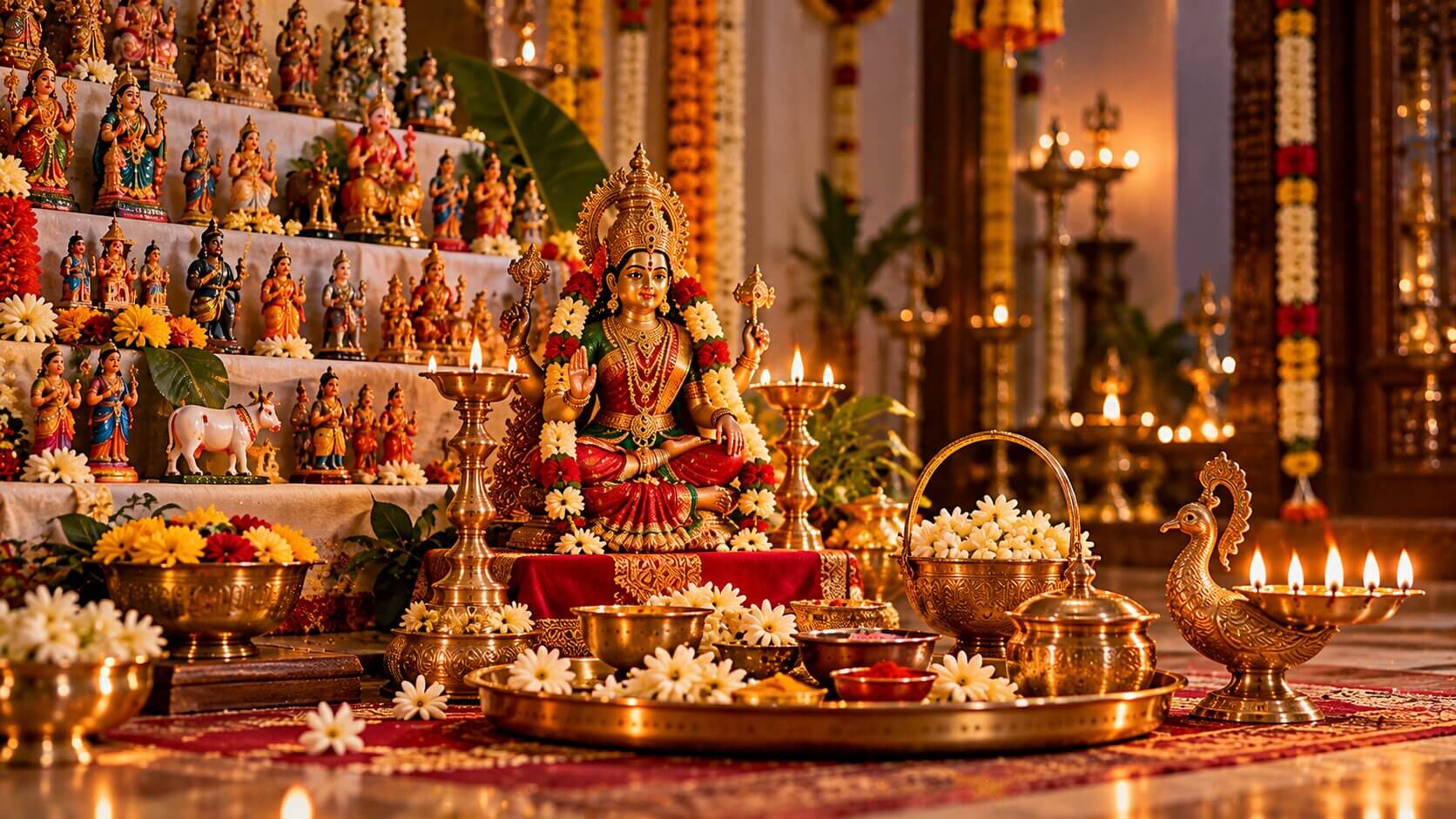
Navaratri 2026: quick answer
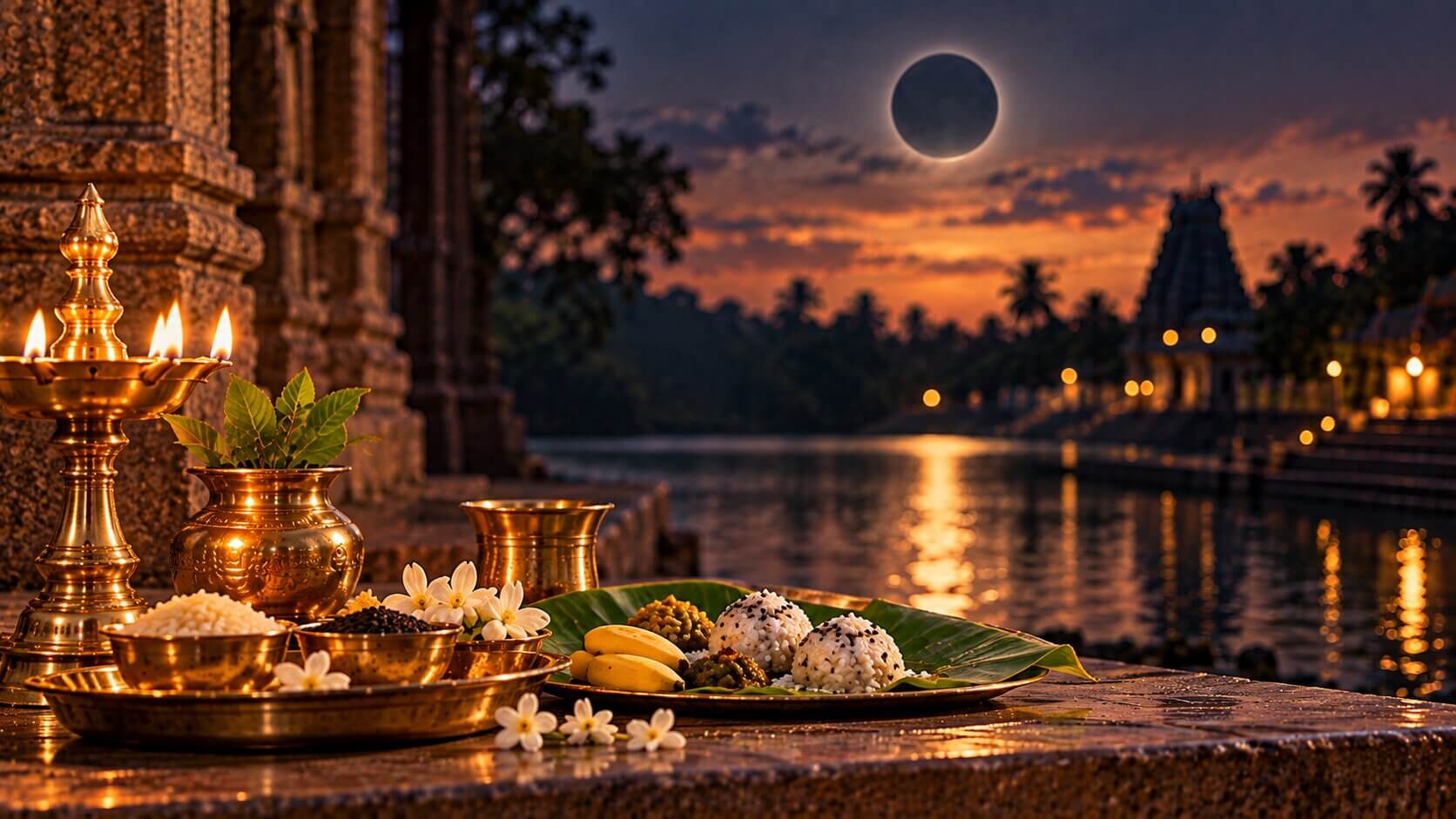
For 2026, widely used national Panchang sources place Sharad Navaratri from 11 to 19 October, with Vijayadashami/Dussehra on 20 October. Because the lunar tithis are compressed this year, Ashtami and Navami observances can cluster around 19 October in national calendars. South Indian Saraswati Pooja, Ayudha Pooja and Vidyarambham can extend differently across 19–21 October depending on the regional calendar, so those closing days should always be identified by region.
Navaratri is not one ritual repeated nine times. It is a framework within which regions emphasise different forms of Devi and different household customs: Navadurga worship in many northern and western traditions, Durga Puja in Bengal, Golu in Tamil homes, and the Saraswati, Pooja Veypu and Vidyarambham sequence in Kerala. A North Indian Ghatasthapana, a Tamil Golu, a Kerala Pooja Veypu and a Bengali Durga Puja are connected by the festival but are not interchangeable rituals.
Navaratri 2026: what South Indian families should check first
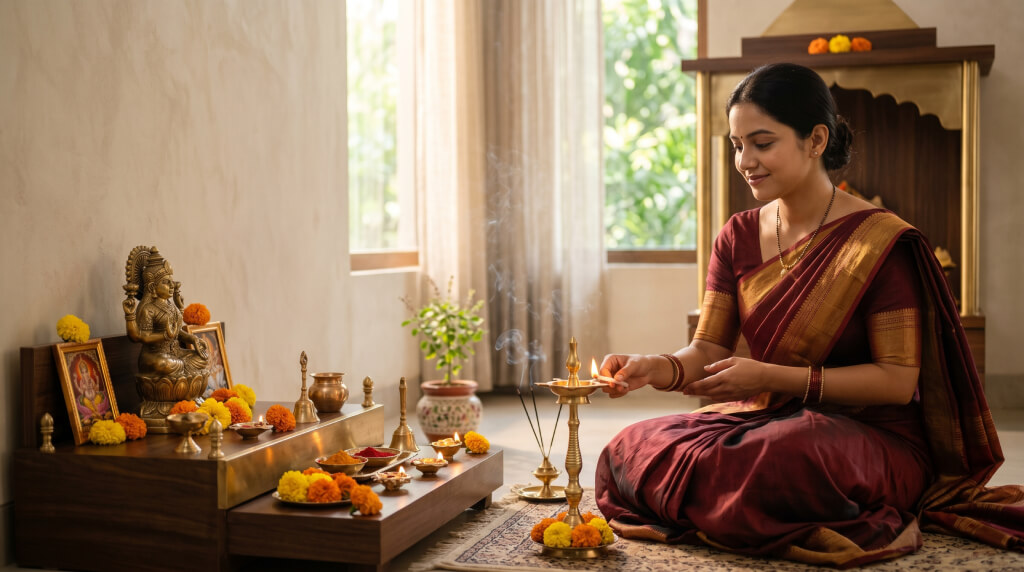
Before buying samagri, decide which tradition your home actually follows. This single step prevents most over-complicated festival checklists.
Tradition / practice | Typical focus | What changes in your setup |
|---|---|---|
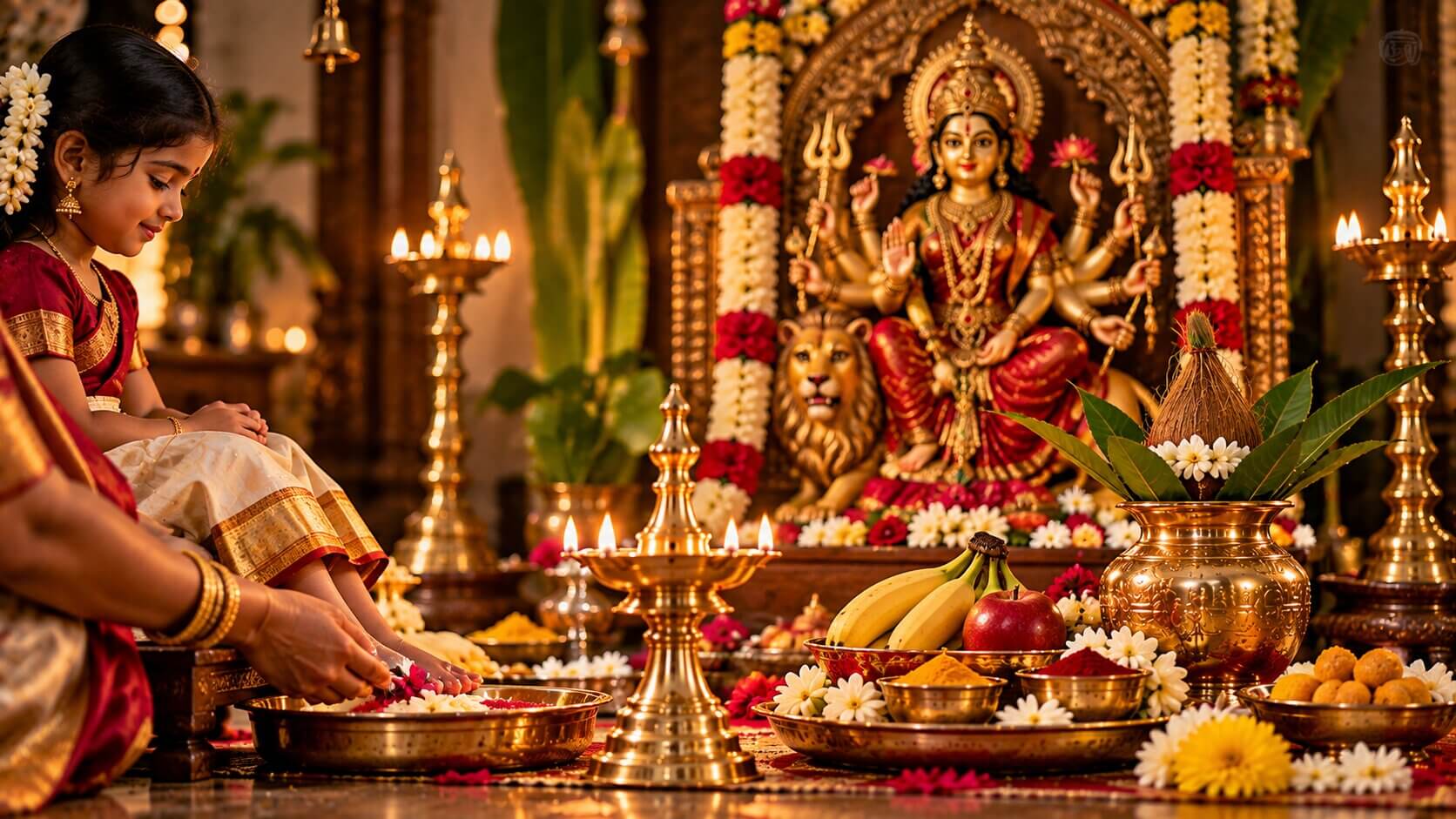
Simple daily Devi pooja | Lamp, flowers, kumkum, naivedyam, aarti | Compact altar; few reusable items |
Tamil Golu / Bommai Golu | Dolls on steps, visiting, sundal, thamboolam | Golu steps, dolls, lamps, guest and return-gift preparation |
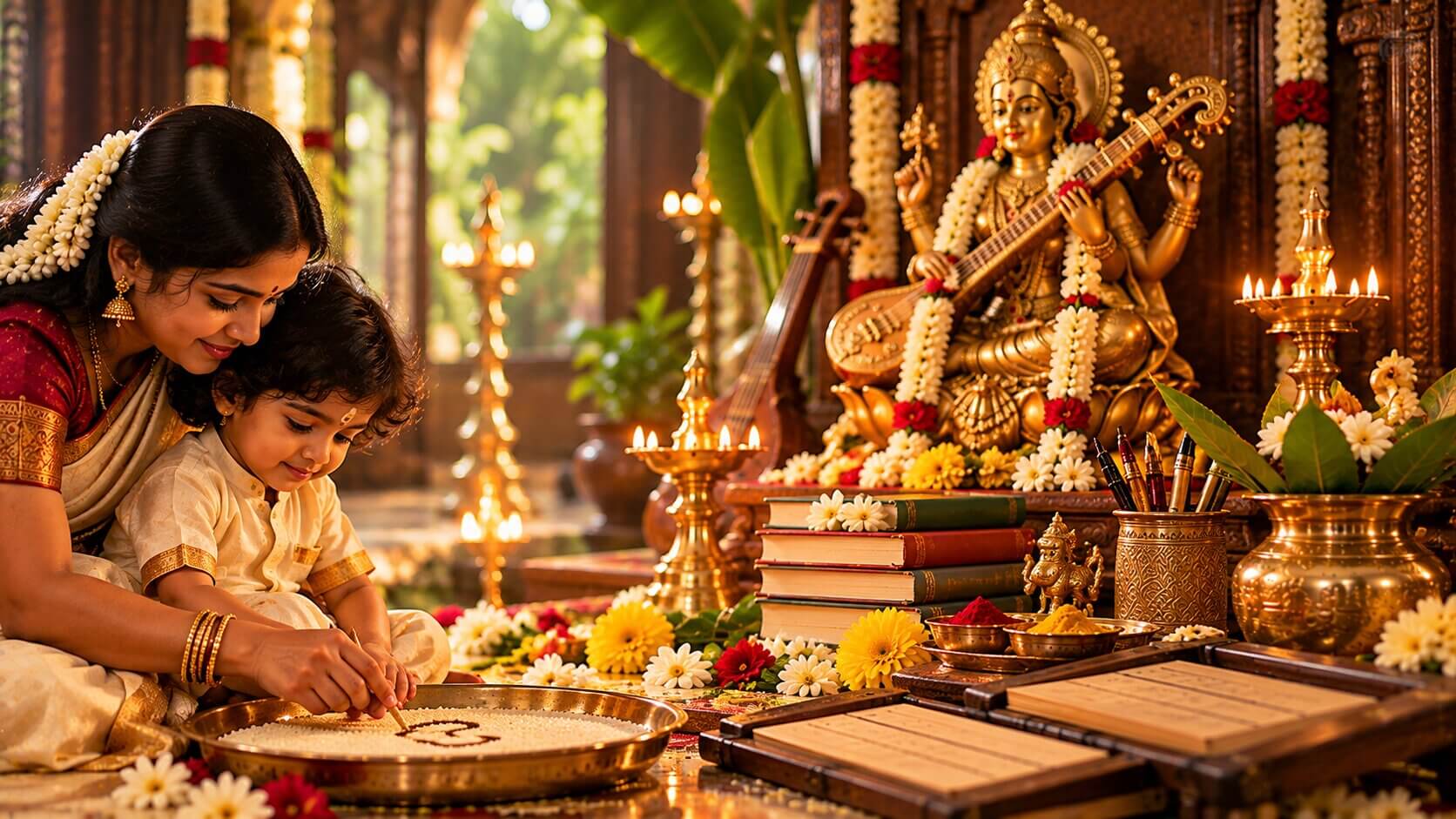
Kerala Pooja Veypu | Books and instruments placed for Saraswati worship | Dedicated clean area for learning materials |
Ayudha Pooja | Tools, instruments, machines and vehicles | Cleaning and arranging the items being honoured |
Ghatasthapana | Kalash installation and related daily worship | Kalash, soil/barley and region-specific samagri |
The nine forms of Durga
The Navadurga sequence gives the nine nights a devotional progression. Shailaputri begins with grounded strength; Brahmacharini represents disciplined tapas; Chandraghanta protective courage; Kushmanda creative radiance; Skandamata maternal grace; Katyayani decisive strength; Kalaratri the fierce removal of fear and darkness; Mahagauri purification and serenity; and Siddhidatri completion and spiritual accomplishment. These associations are best treated as devotional meanings rather than guaranteed outcomes from wearing a colour or buying a particular object.
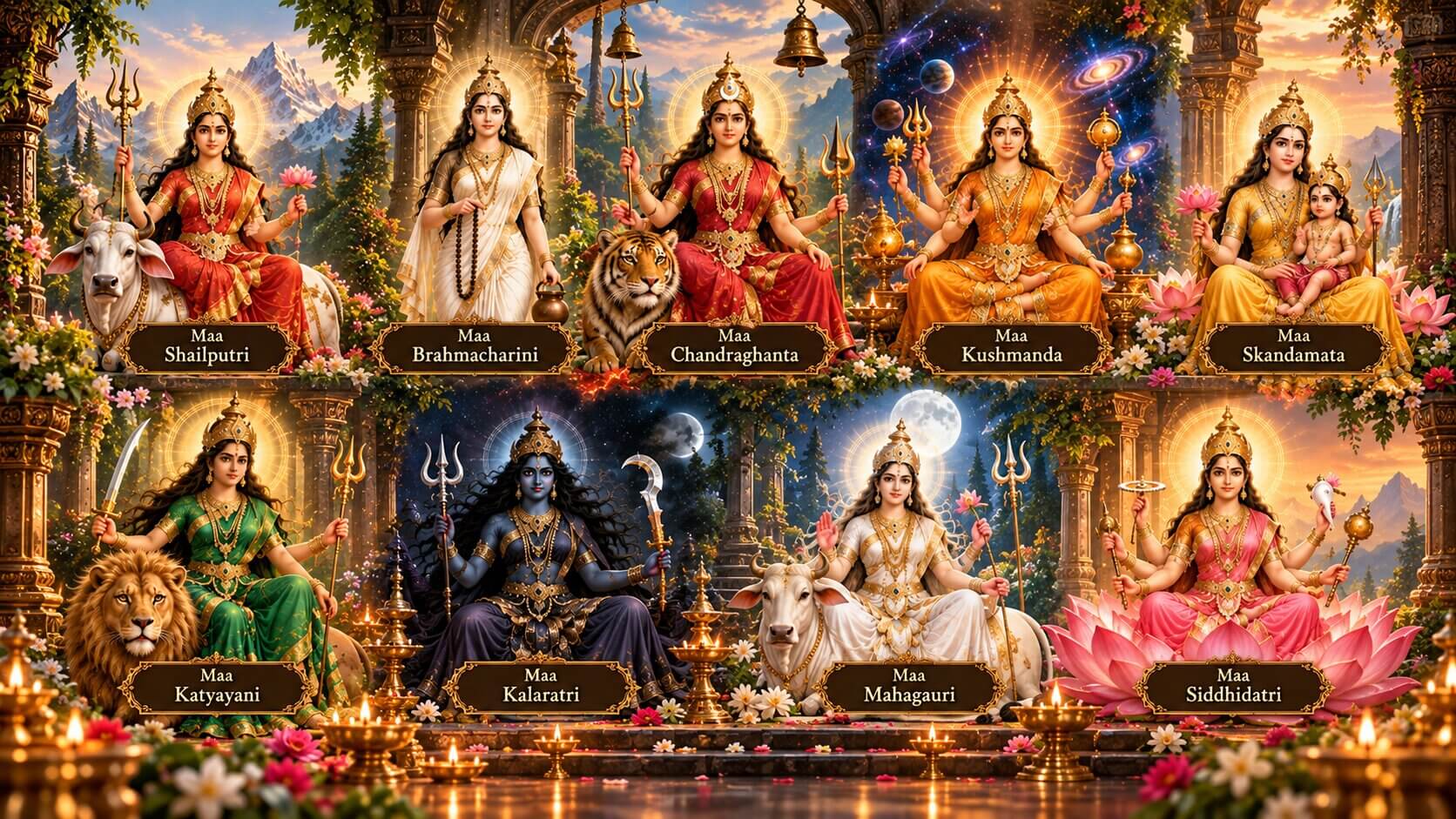
Navaratri 2026: nine days, goddess, colour and devotional focus
Day | Date | Navadurga | Popular 2026 colour | Devotional focus |
|---|---|---|---|---|
1 | 11 Oct | Shailaputri | Orange | Beginning with steadiness and devotion |
2 | 12 Oct | Brahmacharini | White | Discipline and tapas |
3 | 13 Oct | Chandraghanta | Red | Courage and protection |
4 | 14 Oct | Kushmanda | Royal Blue | Creative energy and radiance |
5 | 15 Oct | Skandamata | Yellow | Nurturing and maternal strength |
6 | 16 Oct | Katyayani | Green | Resolve and righteous action |
7 | 17 Oct | Kalaratri | Grey | Fearlessness and transformation |
8 | 18 Oct | Mahagauri* | Purple | Purity and renewal |
9 | 19 Oct | Siddhidatri* | Peacock Green | Completion and grace |
*Goddess names for Days 8 and 9 follow the popular calendar-day sequence. Tithi-based Ashtami and Navami observances fall on 19 October.
Do the nine Navaratri colours have to be followed?
No. The nine-colour sequence changes by year and is popular for clothing and community celebration, but it is not a requirement for a valid home pooja. In 2026 the widely circulated sequence from 11 to 19 October is orange, white, red, royal blue, yellow, green, grey, purple and peacock green.
Why the 2026 dates need a tithi note
Sharad Navaratri begins on Sunday, 11 October 2026. The 2026 lunar sequence is unusual: Saptami spans two sunrises, and Ashtami and Navami are compressed near the end of the festival. This is why some calendars label 18 October as the eighth calendar day while tithi-based Durga Ashtami observance is shown on 19 October. Vijayadashami follows on 20 October in the widely used national calendar.
Because the popular goddess and colour sequence for the last two days does not align perfectly with the tithis, treat the table above as a calendar-day guide, not as ritual law. Kerala’s Saraswati, Ayudha and Vidyarambham observances follow their own regional calendar and are best checked against the Kerala government calendar rather than a national table.
Golu, Ghatasthapana and Pooja Veypu: three different setups
Ghatasthapana installs a kalash at the beginning of Navaratri in traditions that follow it. Tamil Golu arranges dolls and sacred figures on stepped displays, with a strong visiting, singing, sundal and thamboolam dimension. Kerala Pooja Veypu places books and learning materials before Saraswati in the closing days, ahead of Vidyarambham. Most households keep one or two of these, not all three, so follow the setup your family already observes.
Basic Navaratri pooja samagri for a simple home pooja
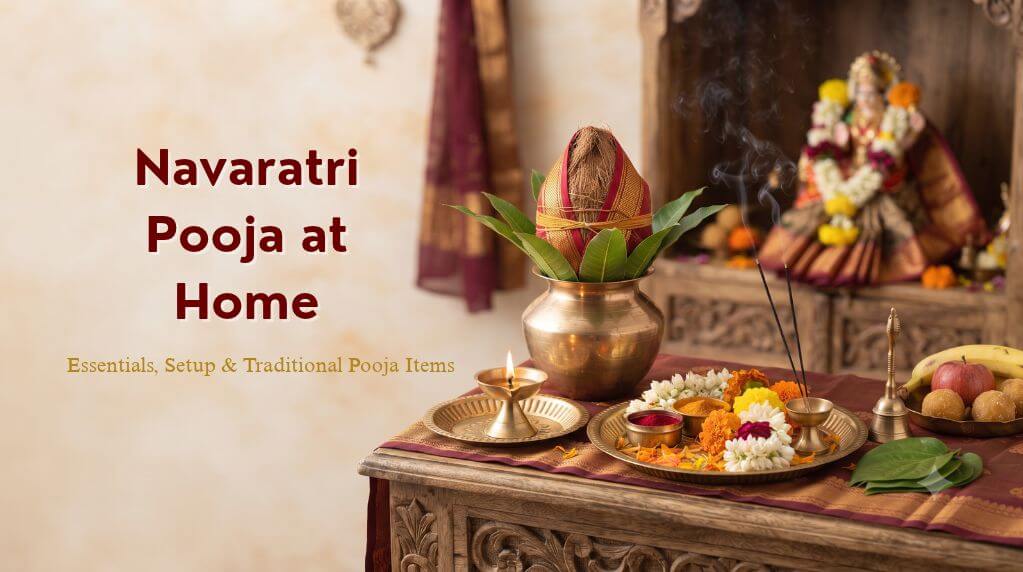
- Devi image or idol
- Clean chowki, shelf or altar cloth
- Deepam or diya with safe wick and ghee/oil
- Pooja thali
- Kumkum, turmeric, chandan and akshat according to family practice
- Fresh flowers
- Incense or dhoop if used at home
- Naivedyam ingredients
- Bell and camphor if part of your regular pooja
- Kalash and related materials only if your tradition uses Ghatasthapana
You can also read our article on complete Navratri pooja Items list for more details
How to keep daily Navaratri pooja simple
- Clean the altar and refresh flowers before the prayer.
- Light the lamp safely and begin with your family’s usual invocation.
- Offer kumkum, flowers and naivedyam.
- Recite a Devi stotra, nama or prayer you already know. Consistency is more useful than collecting many unfamiliar mantras from the internet.
- Perform aarti and share prasadam.
- On the closing days, shift to your region’s Saraswati, Ayudha, Kanya Pujan, Golu or Vijayadashami traditions.
If you keep Golu
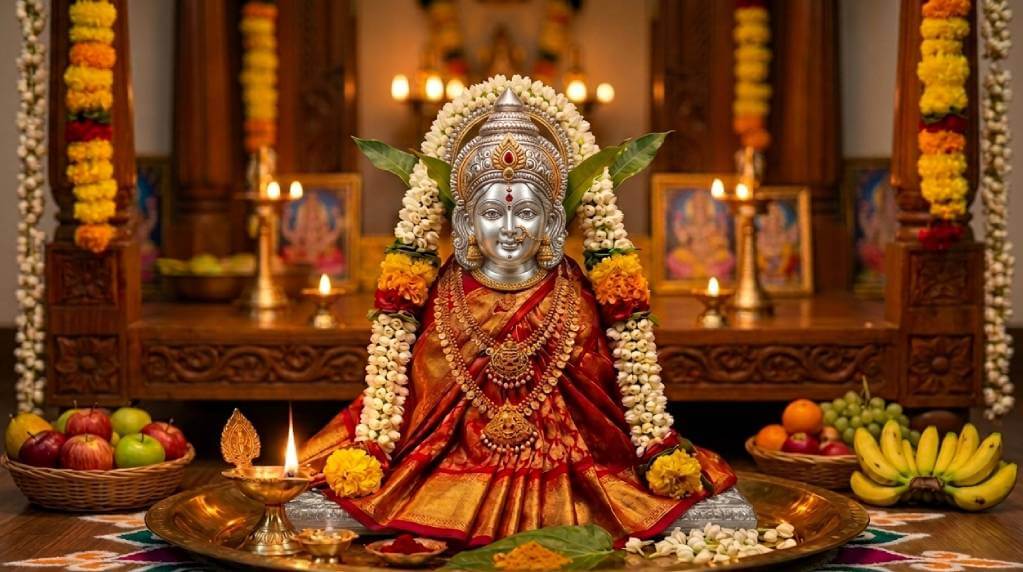
Golu is both devotional and social. Dolls are arranged on steps, lamps are lit, guests visit, songs and slokas may be offered, and sundal and thamboolam are shared. A practical Golu plan covers guest flow and return gifts as well as the altar itself.
- Choose an odd number of stable steps, according to your family practice and the space available.
- Place heavier dolls on lower levels and keep fragile pieces away from the edge.
- Arrange deity and traditional sets with visual hierarchy rather than filling every gap.
- Leave enough walking space around the display.
- Keep the lamp on a stable, heat-safe surface, away from cloth backdrops, paper decorations, the Golu steps and children’s reach.
- Create a small area for kumkum, thamboolam and return gifts so guest visits do not disturb the main display.
- Plan daily sundal, prasadam and thamboolam quantities based on realistic visitor numbers.
- Choose return gifts that are useful and easy to pack rather than oversized decorative pieces.
Choosing reusable items for nine days
For a nine-night festival, reusable items matter more than a large one-day display. Reusable pooja articles make sense where they solve a real need: a pooja thali for daily offerings, kumkum boxes for the altar or thamboolam, a flower basket for archana flowers, or a stable brass diya for repeated evening worship. A stable diya, an easy-to-clean thali, a flower container and compact kumkum storage all reduce daily setup time.
For Golu visitors, small brass return gifts can be considered separately from the core pooja setup. Size, weight, packing and usefulness matter as much as appearance, especially when preparing multiple pieces for visitors.
Navaratri fasting and food: North and South Indian practices differ
Many search results describe a North Indian Navaratri fast built around vrat grains and restrictions on ordinary cereals. That is not the only Navaratri food tradition. Tamil and Kerala households may follow a regular vegetarian diet, prepare sundal, payasam or other naivedyam, and observe the festival without the same fasting rules. Bengali Durga Puja food customs are different again.
If you are wondering what to eat during Navaratri, check your own regional practice first. Those following a specific vrata should use that tradition’s food rules, while those keeping a simple South Indian home pooja need not adopt an unfamiliar fasting menu.
Daily naivedyam: keep variety optional
Some families enjoy offering a different sundal, fruit or sweet each day. This can make the nine days feel distinct, but it is not necessary to create nine elaborate menus. A small fresh offering that the household can consume as prasadam is better than a large decorative spread that becomes waste.
How Navaratri closes in different South Indian homes
Practice | Closing focus | What happens next |
|---|---|---|
Tamil Golu | Final pooja and conclusion of display | Dolls are put away according to family custom after the festival |
Saraswati Pooja | Books/instruments placed for worship | Returned to use on Vijayadashami |
Ayudha Pooja | Tools, machines and vehicles honoured | Work resumes after the pooja period |
Kerala Pooja Veypu | Books placed before Saraswati | Pooja Eduppu and Vidyarambham follow |
Vijayadashami | Auspicious new beginning | Learning, music, dance or other studies may be begun or resumed |
Navaratri return gifts: devotional hospitality before merchandising
In Golu homes, return gifts are part of hospitality, not the purpose of the visit. Kumkum, turmeric, betel leaves and nuts where customary, a small useful gift and prasadam can form the thamboolam. Brass kumkum boxes, small diyas, bells or bookmarks can work when the budget and guest list suit them, but a thoughtful modest gift is preferable to an expensive object chosen only for display.
Frequently Asked Questions
1. Do all homes need Ghatasthapana for Navaratri? No. Navaratri is observed differently across regions and families. A Tamil Golu or Kerala Pooja Veypu household should not be made to feel incomplete because it does not copy a North Indian setup.
2. What is the simplest daily Navaratri pooja? A clean altar, lamp, flowers, kumkum, a short Devi prayer, naivedyam and aarti are enough for a simple household observance.
3. Is Golu compulsory in Tamil homes? No. Golu is an important Tamil Navaratri tradition, but not every family keeps one.
4. When should I prepare return gifts? If you expect Golu visitors, prepare them before the festival or early in the nine-night period so the devotional routine is not interrupted by last-minute packing.
5. Can the same brass diya be used every day? Yes, if it is cleaned appropriately, placed safely and suits your family’s pooja practice.
Sources checked
- Drik Panchang – 2026 Sharad Navratri start date
- Drik Panchang – 2026 Shardiya Navratri calendar
- Kerala Government General Administration Department – Official Calendar 2026
Editorial note: National Panchang listings and Kerala’s official calendar are both used because South Indian closing-day observances do not map perfectly onto one nationwide Navaratri table. Where they differ, the regional basis is stated.